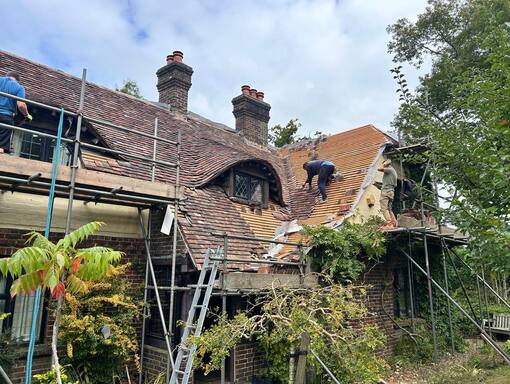
When a roof begins to show signs of deterioration, deciding what to do next is not always straightforward. A small leak may require nothing more than a targeted repair, while recurring problems across an ageing roof can indicate that more comprehensive work is appropriate. The important part is understanding the condition of the roofing system as a whole rather than making a decision based on one visible symptom.
Repairing, re-roofing and complete roof replacement each have their place. The right approach depends on factors such as the extent of the damage, the condition of the existing materials, whether problems are recurring and what is happening beneath the visible roof covering.
For homeowners in Attleborough, Norfolk, a professional roof assessment can provide the information needed to make an informed decision. At Attleborough Roofing Services, we focus on identifying the cause and extent of roofing problems before recommending the most appropriate solution.
What Is the Difference Between Roof Repair, Re-Roofing and Replacement?
Although these terms can sometimes be used interchangeably, they generally describe different levels of roofing work.
Roof Repair
Repairs concentrate on specific defects while retaining the majority of the existing roof. This might involve replacing damaged tiles, repairing flashing or addressing a localised leak.
Re-Roofing
Re-roofing involves renewing substantial or complete sections of the roof covering and associated components where necessary. It provides an opportunity to address widespread deterioration rather than continuing with individual repairs.
Complete Roof Replacement
Where deterioration extends beyond the covering or the existing roofing system requires extensive renewal, a more comprehensive replacement may be appropriate. The exact work required depends on the condition of the roof discovered during assessment.
The key is choosing a level of work that matches the actual condition of the property.
When Is a Roof Repair Usually Enough?
Targeted repair is often the most appropriate approach when the defect is clearly localised and the surrounding roof remains in sound condition.
Examples can include:
- A small number of slipped or damaged tiles
- An isolated flashing defect
- Localised damage following difficult weather
- A specific leaking junction
- Minor ridge or verge deterioration
- A clearly identifiable defect affecting one section
In these circumstances, there may be little reason to interfere with roofing materials that continue to perform correctly.
Professional repairs should address the cause of the problem rather than simply disguise its symptoms.
Consider the Condition of the Surrounding Roof
A damaged tile does not exist in isolation from the rest of the roofing system.
If one tile has slipped but everything around it remains secure, a straightforward repair may be sufficient. If tiles are repeatedly becoming displaced across different areas, however, the wider condition of the roof deserves investigation.
This distinction is important.
The decision between repair and more substantial work should be based on whether deterioration is isolated or widespread.
Recurring Leaks Can Change the Picture
A single leak can often be traced to a particular defect and repaired successfully.
Repeated leaks are different.
If water ingress continually develops in different sections despite previous repairs, the roof may have several ageing or deteriorating components. Continually dealing with each new leak individually can leave the underlying pattern unresolved.
Signs worth investigating include:
- Damp appearing in different locations
- Repairs being required increasingly frequently
- Several vulnerable roof junctions
- Widespread tile deterioration
- Water ingress returning after previous work
In these circumstances, re-roofing or replacement may provide a more comprehensive approach.
When Does Re-Roofing Become Worth Considering?
Re-roofing can be appropriate when deterioration affects a significant proportion of the roof rather than one isolated section.
An ageing roof may contain tiles that are becoming increasingly fragile, older underlay, deteriorating battens or numerous areas that have already undergone repair.
Renewing the roof provides an opportunity to address these components together.
Widespread Tile Deterioration
When numerous tiles are cracked, damaged or becoming unreliable, replacing them individually may no longer address the overall condition.
Ageing Underlying Materials
The visible covering may not reveal deterioration beneath it. Re-roofing provides access to components that are otherwise difficult to inspect fully.
Numerous Previous Repairs
A roof containing many separate repaired sections may eventually benefit from being renewed as a complete system.
What Can Complete Replacement Address?
Sometimes roofing problems extend beyond the outer covering.
Once an older roof has deteriorated substantially, a more comprehensive replacement can provide an opportunity to investigate and address the complete construction as necessary.
This may include attention to the roof covering, supporting components, weatherproofing details and other areas that contribute to overall performance.
The objective is not simply to give the property a new-looking roof. It is to ensure that the complete system provides dependable protection.
Roof Age Matters, but It Should Not Make the Decision Alone
Homeowners often wonder whether a roof should automatically be replaced once it reaches a certain age.
Age is useful context, but condition is more important.
An older roof that has been well maintained and remains sound may still respond perfectly well to local repairs. Conversely, another roof may experience widespread deterioration earlier because of its construction, materials, exposure or previous maintenance.
A professional assessment should therefore consider how the roof is actually performing rather than relying solely on its age.
Look at How Frequently Problems Are Occurring
The frequency of roofing problems can be particularly revealing.
If years pass between small isolated repairs, the roof may still be functioning effectively overall.
If new defects are appearing regularly, there may be a wider deterioration pattern.
It can be useful to ask:
Are Repairs Becoming More Frequent?
Increasing repair requirements can indicate that multiple components are ageing simultaneously.
Are Problems Appearing in New Areas?
Deterioration across separate sections may suggest the issue is no longer localised.
Do Previous Problems Keep Returning?
Recurring defects can indicate that the underlying cause requires more comprehensive attention.
These patterns help determine whether continued repair remains appropriate.
Consider What Is Happening Beneath the Tiles
Roof tiles or slates are only the visible part of a larger system.
A roof can also depend on components such as:
- Underlay
- Battens
- Fixings
- Flashing
- Valleys
- Ridges
- Verges
- Other roof junctions
When these components remain sound, targeted repairs to the covering can be highly effective.
Where deterioration exists across several layers, replacing individual tiles may do little to improve the overall condition of the roof.
This is one of the reasons a thorough inspection is so important.
Flashing and Junctions Need Careful Assessment
Many roof leaks originate around junctions rather than across the main roof covering.
Chimneys, valleys, abutments and changes in roof level require careful detailing because these locations manage significant amounts of rainwater.
A defect confined to one junction may be repairable without substantial work elsewhere.
If numerous junctions are deteriorating alongside an ageing roof covering, however, the case for broader renewal becomes stronger.
What About a Roof That Looks Worn but Does Not Leak?
The absence of an internal leak does not necessarily mean every part of a roof is in good condition.
Some defects can develop before water becomes visible inside the property. Loose materials, deteriorating components or weathered sections may therefore warrant attention even when ceilings remain completely dry.
Equally, a roof should not be replaced simply because it looks old from ground level.
Professional assessment helps distinguish cosmetic ageing from deterioration that is affecting performance.
Why Repeated Patch Repairs Are Not Always the Answer
Individual repairs are valuable when used for appropriate localised defects.
Problems arise when patch repairs are repeatedly used on a roof experiencing widespread deterioration.
This approach can create a cycle where one section is repaired only for another weak area to fail later. Eventually, the roof becomes a collection of separate repairs while the original materials continue ageing between them.
At this point, re-roofing can provide a more coherent solution by treating the roof as one interconnected system.
Why a Professional Roof Inspection Matters
Choosing between repair, re-roofing and replacement requires more than looking at the roof from the garden.
Water can travel beneath roofing materials before appearing internally, while deterioration in battens, underlay and other concealed components may not be immediately visible.
A professional inspection considers:
- The extent of visible deterioration
- The condition of surrounding materials
- Evidence of previous repairs
- The location and cause of leaks
- Vulnerable junctions and flashing
- Signs of movement or deterioration
- The general condition of the roofing system
This allows the recommended work to be proportionate to the actual problem.
Choosing Work That Solves the Cause
The best roofing solution is not necessarily the smallest or the most extensive. It is the one that properly addresses the condition of the roof.
A professional repair can be the ideal solution for a sound roof with one specific defect. Re-roofing can make more sense when deterioration has become widespread, while complete replacement may be appropriate where the roofing system requires more extensive renewal.
At Attleborough Roofing Services, we approach roofing work by first establishing what is causing the problem and how much of the roof is affected. This helps ensure that work is focused on providing a reliable long-term result rather than simply treating whatever symptom is most visible.
Conclusion
Choosing between repairing, re-roofing and replacing a roof ultimately depends on the extent and nature of its deterioration. Localised defects on an otherwise sound roof can often be resolved through professional repairs, while recurring leaks, widespread material deterioration and numerous previous repairs may indicate that re-roofing is becoming more appropriate. Where problems affect the wider roofing system, more comprehensive replacement may be required.
The important point is not to make the decision based solely on roof age, appearance or one damaged area. Assessing the entire roofing system provides a much clearer understanding of what work is genuinely necessary.
For homeowners in Attleborough, Norfolk, Attleborough Roofing Services provides professional roofing assessments, repairs and more extensive roofing work tailored to the condition of each property. If you are unsure whether your roof requires repair, re-roofing or replacement, contact our team to arrange an assessment and discuss the most appropriate way forward.
Call us on: 01603 249 398
Click here to find out more about Attleborough Roofing Services
Click here to complete our contact form and see how we can help with your roofing needs.